VELORYNT / SENTINEL AI PLATFORM
A defense built around your environment.
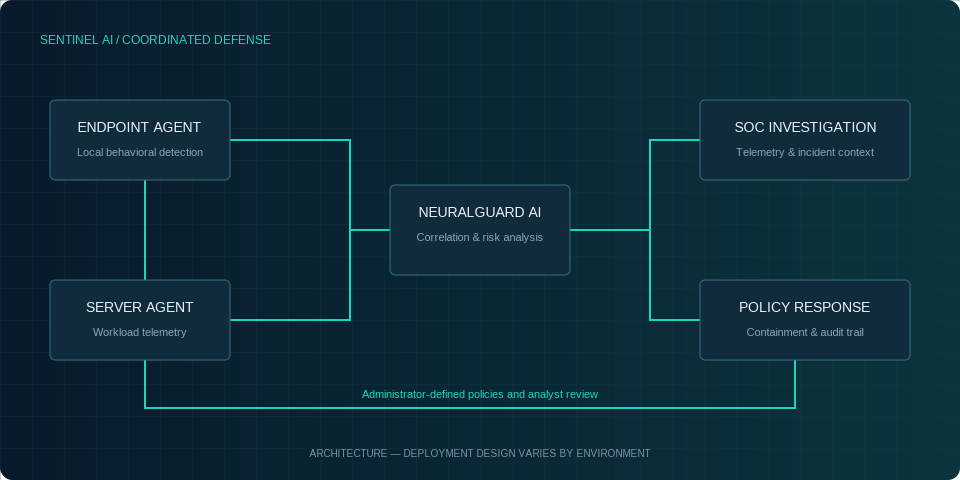
Sentinel AI uses an agent on each protected endpoint or server. Local analysis evaluates activity on the device while the management layer brings telemetry, policy and investigation context together. Deployment architecture is selected according to customer network and governance requirements.
01Prevention at the device
Exploit prevention, next-generation antivirus and behavioral controls evaluate process and file activity. Local policies continue to apply when the management connection is interrupted; telemetry delivery resumes when connectivity returns.
02Detection with enterprise context
NeuralGuard correlates process ancestry, script execution, identity and network signals. Security teams review risk classifications and the evidence behind a detection rather than relying on a single unexplained score.
03Investigation for the SOC
Incident timelines connect related activity across the estate. Analysts can examine a process chain, identify affected systems and use threat-hunting queries to establish the scope of an intrusion.
04Governed response
Administrators decide which actions may be automated. Containment can isolate an endpoint, quarantine an artifact or terminate a malicious process. Critical servers can use approval-first policies to preserve availability.
05Recovery and continuous improvement
Response is followed by evidence review, restoration from validated customer backups and adjustment of security policies. Velorynt does not replace a tested recovery program or promise universal rollback.