Recognize suspicious encryption
Rapid file modification, unusual encryption behavior and related process activity can indicate destructive intent. Detection combines these signals with process lineage and the system context.
Behavioral ransomware defense for enterprise endpoints and critical servers, supported by governed containment and a practical recovery strategy.
Ransomware defense begins before encryption. Script monitoring, exploit prevention and identity-related signals help identify an attack path early. No security product can guarantee that every ransomware attempt will be stopped.
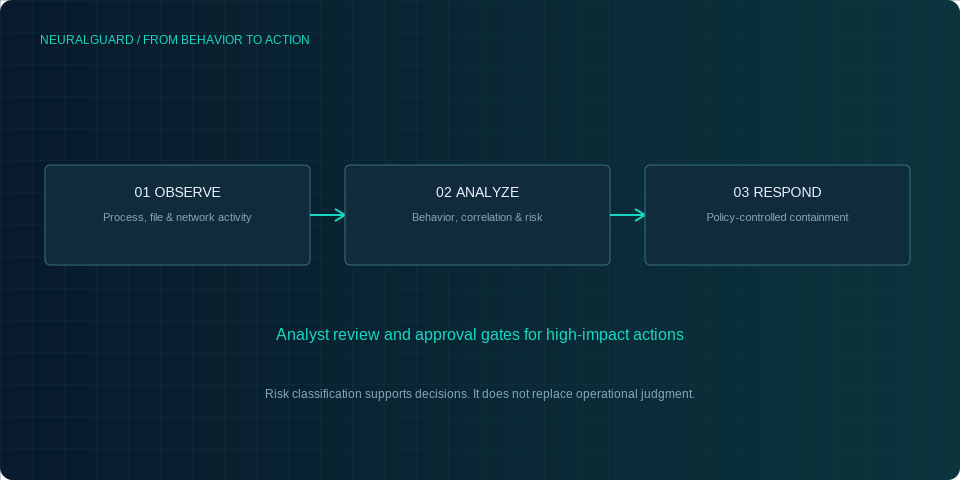
Rapid file modification, unusual encryption behavior and related process activity can indicate destructive intent. Detection combines these signals with process lineage and the system context.
When a detection meets the configured threshold, permitted actions can terminate the process or isolate the host. Production servers may require analyst approval to balance containment and service continuity.
Review network connections, related identities and suspicious activity on other protected machines. A contained endpoint can still be part of a wider intrusion that requires investigation.
Maintain segregated backups, verify restore procedures and document recovery roles. Velorynt can supply investigation context; restoration remains part of the customer business-continuity plan.
Review the incident timeline, initial access route and policy decisions. Use the findings to adjust coverage, administrator privileges, exceptions and response playbooks.
Explore endpoint and server defense for your enterprise environment.