Prioritize the alert
Review risk classification, affected asset role and evidence confidence. Critical service context can change the response order even when two alerts have similar technical scores.
EDR investigation, threat hunting and policy-driven containment for security operations teams managing complex endpoint and server estates.
A useful detection must lead to a defensible decision. Velorynt presents the event, its evidence and related activity so analysts can establish scope before selecting an action appropriate to the affected business service.
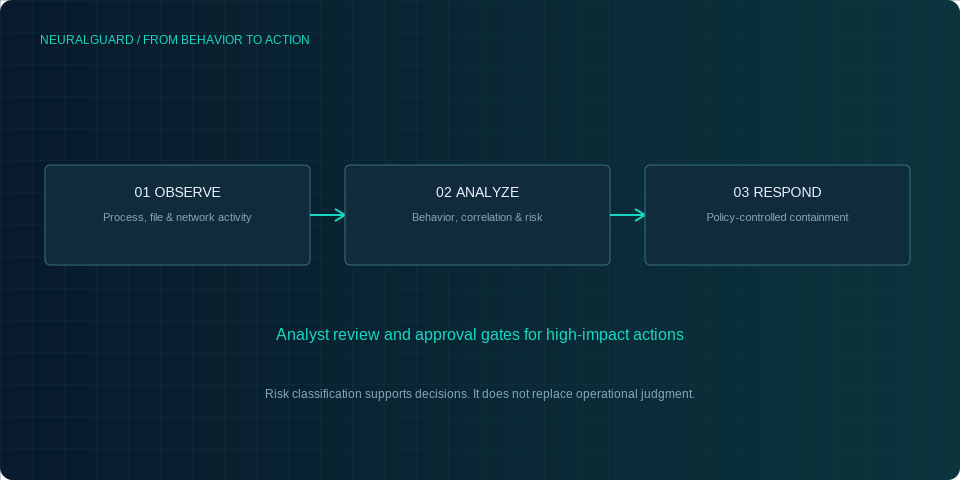
Review risk classification, affected asset role and evidence confidence. Critical service context can change the response order even when two alerts have similar technical scores.
Examine process ancestry, scripts, network connections and file activity. Search for similar behavior across asset groups to distinguish a single-device event from a coordinated intrusion.
Start with an observed behavior or an intelligence-led question. Query the relevant telemetry, validate findings and document why activity is suspicious before taking disruptive action.
Isolate affected endpoints, terminate permitted processes and quarantine artifacts. Confirm that the action completed, preserve evidence and coordinate with application owners for critical servers.
Record the analyst, timestamp, selected action and decision context. The audit trail supports internal review and improvement of response rules; retention is part of the deployment agreement.
Explore endpoint and server defense for your enterprise environment.